
Website Development in Nepal
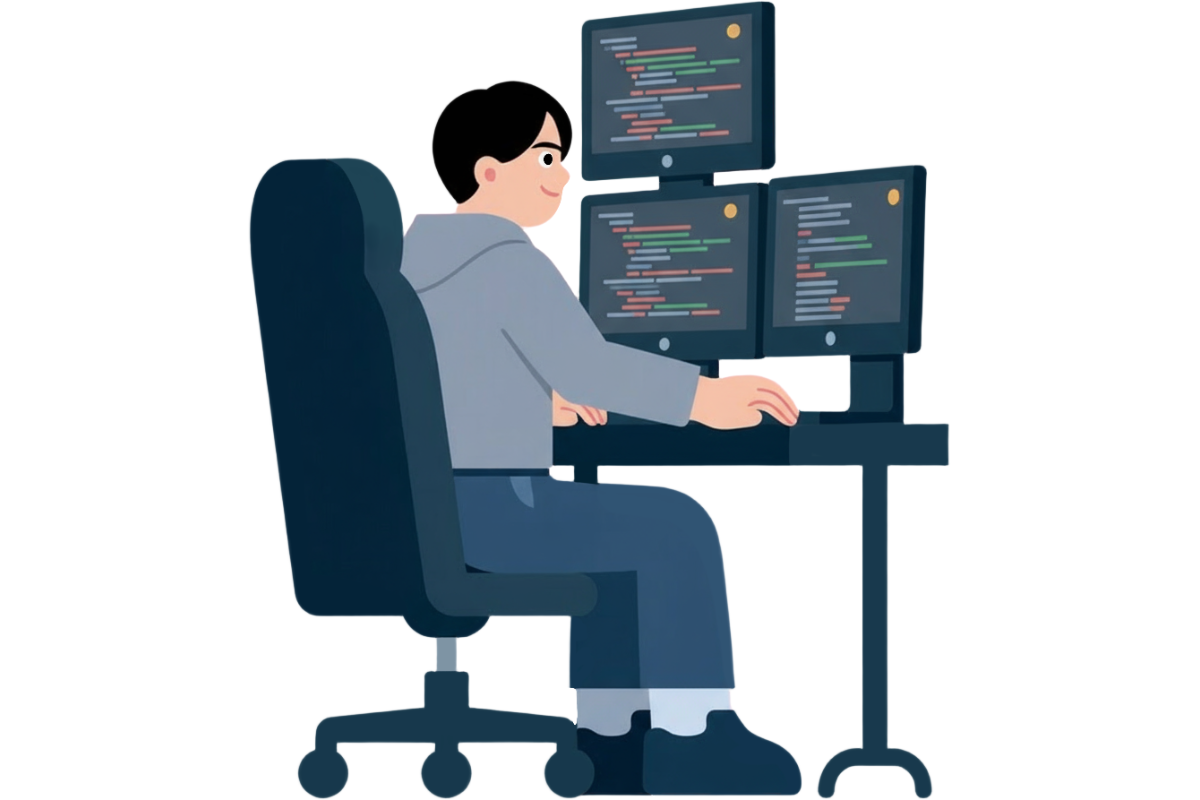
A website is often the first place people go when they want to understand a business, service, product, professional, or organization. In Nepal, businesses of all sizes are increasingly using websites to present their services, generate inquiries, sell products, publish information, and build credibility online.
However, website development in Nepal is not simply about creating a few pages and putting them online. A useful website needs to be fast, mobile-friendly, easy to navigate, secure, search-engine friendly, and aligned with the actual goals of the business.
Whether you need a business website, portfolio, ecommerce store, booking platform, news portal, or a custom web application, the development approach should begin with one question: What should the website help its users accomplish?
What Is Website Development?
Website development is the process of planning, designing, building, testing, deploying, and maintaining a website or web application.
It can involve several areas, including:
-
Frontend development and user interfaces
-
Backend development and server-side logic
-
Database design and management
-
API development and integrations
-
Authentication and authorization
-
Payment gateway integration
-
Search engine optimization
-
Website security
-
Performance optimization
-
Hosting and deployment
-
Content management
-
Ongoing maintenance
For a small company, this might mean a five-page business website. For an ecommerce company, it could involve product management, customer accounts, orders, payments, inventory, and delivery information. A larger organization may require a custom dashboard connected to multiple systems.
The technology should therefore follow the project's requirements rather than the other way around.
Why Do Businesses in Nepal Need a Professional Website?
Social media platforms are useful for reaching audiences, but a business does not have complete control over those platforms. A dedicated website gives a business its own digital space where it can explain what it does, publish important information, collect leads, sell products, and communicate directly with customers.
A professional website can help with:
Building an online presence
Customers searching for a company or service often expect to find useful information online. A website provides a central place for business details, services, contact information, products, portfolios, and frequently asked questions.
Generating inquiries
A well-structured website can guide visitors toward actions such as submitting an inquiry, requesting a quotation, booking a service, calling a business, or sending a message.
Selling products online
For businesses selling clothing, electronics, handicrafts, food products, cosmetics, or other goods, an ecommerce website can provide a structured way to display products and manage online orders.
Supporting long-term SEO
Unlike a single social media post, website content can continue attracting search traffic when it answers questions people are actively searching for.
Establishing ownership and credibility
A website using a business's own domain can provide a more controlled and professional online presence than relying entirely on third-party platforms.
Types of Website Development in Nepal
Different businesses require different types of websites. Some common examples include:
Business Websites
A business website normally includes pages such as Home, About, Services, Portfolio or Projects, Blog, Contact, and FAQs.
The objective is usually to explain the business clearly and encourage potential customers to get in touch.
Ecommerce Websites
An ecommerce website requires more than attractive product pages. It may need:
-
Product categories
-
Search and filtering
-
Shopping cart
-
Checkout
-
Customer accounts
-
Order management
-
Payment integration
-
Inventory management
-
Delivery information
-
Product reviews
-
Admin dashboards
An ecommerce developer in Nepal may therefore need to consider both the customer-facing shopping experience and the systems required to manage orders behind the scenes.
Portfolio Websites
Developers, designers, photographers, consultants, students, and other professionals can use portfolio websites to showcase their work, skills, experience, projects, and contact information.
Custom Web Applications
Some organizations need functionality that cannot be handled effectively by a simple informational website. Examples include dashboards, booking systems, employee management systems, learning platforms, inventory applications, and customer portals.
These projects often require full-stack development, database architecture, APIs, authentication, and custom business logic.
Technologies Used for Modern Website Development
There is no single technology stack that is suitable for every website. The appropriate choice depends on the project's complexity, budget, performance requirements, maintenance needs, and future plans.
Modern projects may use technologies such as:
-
HTML, CSS, and JavaScript for fundamental web development
-
React for interactive user interfaces
-
Next.js for modern React-based websites and applications
-
Node.js for backend development and APIs
-
Express.js for server-side applications
-
MongoDB for document-oriented data
-
PostgreSQL and other relational databases for structured data
-
Tailwind CSS for efficient interface development
-
REST APIs for communication between applications
-
Cloudinary or similar services for media management
-
Git and GitHub for version control
-
Cloud hosting platforms for deployment and scaling
A Node.js developer in Nepal, for example, may use Node.js to build APIs, authentication systems, dashboards, and backend services.
Similarly, a Next.js developer in Nepal may use Next.js when a project needs React-based interfaces combined with features such as server rendering, routing, metadata management, and modern deployment workflows.
Website Development and SEO Should Work Together
SEO should not be treated as something added after a website has already been built.
Technical decisions made during development can influence how effectively search engines understand and access a website.
An SEO-friendly website should consider:
-
Logical URL structures
-
Descriptive page titles
-
Useful meta descriptions
-
Proper heading hierarchy
-
Crawlable navigation
-
Internal linking
-
Mobile usability
-
Fast page loading
-
Image optimization
-
Structured data where appropriate
-
Canonical URLs
-
XML sitemaps
-
Robots.txt configuration
-
Accessible and meaningful content
For example, a page targeting users searching for website development services in Nepal should clearly explain those services instead of repeatedly inserting the phrase "website development Nepal."
Modern SEO is increasingly about satisfying the underlying question behind a search.
Mobile-Friendly Development Is Essential
Many users access websites through smartphones. A website that looks good on a desktop but is difficult to use on a mobile device can create unnecessary friction.
Responsive development should consider:
-
Navigation on smaller screens
-
Readable typography
-
Touch-friendly buttons
-
Proper image sizing
-
Fast loading
-
Forms that are easy to complete
-
Avoiding unnecessary popups
-
Consistent layouts across screen sizes
Mobile responsiveness should be tested during development rather than treated as a final adjustment.
How Much Does Website Development Cost in Nepal?
There is no single fixed price for website development in Nepal because the cost depends heavily on the scope of the project.
Factors that can influence the overall cost include:
-
Number of pages and features
-
Custom design requirements
-
Frontend and backend complexity
-
Database requirements
-
Authentication and user accounts
-
Payment gateway integration
-
Ecommerce functionality
-
Admin dashboard requirements
-
Third-party API integrations
-
SEO and content requirements
-
Hosting and domain requirements
-
Ongoing maintenance
A simple informational website and a custom ecommerce platform should not be evaluated using the same pricing model.
When requesting a quotation, it is better to describe the required functionality rather than asking only for a "website price." A clear project scope makes it easier to compare proposals and avoid unexpected costs later.
Freelance Web Developer or Web Development Company?
Businesses in Nepal can work with either an individual developer or a development company.
A freelance web developer in Nepal may be suitable for a portfolio, small business website, landing page, or project where direct communication and flexibility are priorities.
A development company may be more appropriate when the project requires multiple specialists, larger teams, long-term support, or complex organizational requirements.
Neither option is automatically suitable for every project. The important considerations are communication, technical capability, portfolio relevance, development process, documentation, support, and understanding of the project's requirements.
What Should You Check Before Hiring a Web Developer?
Before choosing a developer, ask practical questions such as:
-
Have they built projects similar to yours?
-
Can they explain the technology choices clearly?
-
Is the website responsive?
-
Who owns the source code?
-
Will you receive access to the domain and hosting?
-
How will SEO be handled?
-
How is website security managed?
-
Is an admin panel required?
-
What happens after the website launches?
-
What maintenance will be needed?
-
How will future changes be handled?
A developer should be able to explain technical decisions in language that makes sense to the client.
Where AI Fits Into Website Development
AI is becoming another tool within modern web development rather than a replacement for fundamental development practices.
Depending on the project, AI can support features such as:
-
Intelligent search
-
Recommendation systems
-
AI chat interfaces
-
Automated content workflows
-
Document processing
-
Data classification
-
Personalized user experiences
-
Customer support assistants
-
Content summarization
-
AI-powered business tools
For example, an ecommerce website could potentially use AI to improve product discovery, while a business application could use an AI assistant to help users find information within a large dataset.
An AI developer in Nepal working on a web project may combine conventional web technologies with AI APIs, machine learning services, databases, and custom application logic.
The important consideration is whether AI solves a genuine user or business problem. Adding an AI feature simply because it is fashionable can make a website more complicated without providing meaningful value.
What Makes a Website Successful?
A successful website is not necessarily the website with the most animations or the largest number of features.
A practical website should make it easy for visitors to:
Understand → Explore → Trust → Act
For example, a service business should quickly communicate what it offers, who it serves, why visitors should consider it, and how they can make an inquiry.
Good website development therefore combines technology with communication, usability, performance, accessibility, security, and business objectives.
Website Maintenance After Launch
Launching a website is not always the end of development.
Websites may require ongoing work such as:
-
Security updates
-
Dependency updates
-
Content changes
-
Backup management
-
Performance monitoring
-
Broken-link checks
-
SEO improvements
-
Database maintenance
-
Bug fixes
-
New features
Businesses should clarify maintenance responsibilities before development begins.
Website Development in Nepal: A Practical Approach
For a new project, a useful development process can look like this:
1. Define the goal
Identify whether the website is intended to generate leads, sell products, publish information, build a personal brand, or provide a web-based service.
2. Understand the users
Think about who will use the website and what information or functionality they need.
3. Plan the structure
Create the sitemap, page hierarchy, navigation, content requirements, and important user journeys.
4. Select appropriate technologies
Choose the stack based on project requirements rather than following technology trends blindly.
5. Develop and test
Build the website, test forms and functionality, check responsive layouts, and identify usability or technical problems.
6. Optimize for search and performance
Implement technical SEO, useful metadata, optimized images, sensible internal linking, and performance improvements.
7. Deploy and maintain
After launch, monitor the website and continue improving it based on user needs and business goals.
About Raju Shrestha
I’m Raju Shrestha, a web developer and full-stack developer in Nepal interested in building practical digital products using modern web technologies.
My work and learning areas include full-stack web development, ecommerce development, backend systems, Next.js, Node.js, databases, SEO, and AI-related web applications.
For businesses or individuals exploring website development in Nepal, the right approach depends on the specific goals, functionality, audience, and long-term requirements of the project. My focus is on creating websites and web applications that are useful, maintainable, responsive, and designed around real user needs.
You can learn more about my work and development interests through my personal website.
Frequently Asked Questions
1. How much does website development cost in Nepal?
There is no universal price. The cost depends on factors such as design complexity, number of pages, ecommerce functionality, backend requirements, integrations, admin dashboards, SEO requirements, and ongoing maintenance.
2. How long does it take to build a website in Nepal?
The timeline depends on the project's scope. A simple informational website can require considerably less development work than an ecommerce platform or custom web application. Content availability, design revisions, integrations, and feature requirements can also affect the timeline.
3. Should I hire a freelance web developer or a company?
Consider the size and complexity of your project. A freelancer can be suitable for many small and medium projects, while a company may be useful when you need a larger team or multiple specialized services.
4. Which technology is best for website development?
There is no universally best technology. React, Next.js, Node.js, Express, MongoDB, PostgreSQL, and other technologies can all be appropriate depending on the project's requirements.
5. Can a website be optimized for Google during development?
Yes. SEO can be incorporated into development through proper URL structures, metadata, headings, internal linking, mobile responsiveness, performance optimization, structured data where appropriate, crawlability, and useful content.
6. Do ecommerce websites need a backend?
Generally, yes. Ecommerce systems commonly need backend functionality for products, users, orders, payments, inventory, authentication, and administrative operations.
7. Is AI necessary for a modern website?
No. AI should be used when it provides a genuine benefit. Many websites work perfectly well without AI. When an AI feature solves a specific user or business problem, it can be integrated into an existing web application.
8. What should I prepare before contacting a web developer?
Prepare your business or project goals, required pages, desired features, examples of websites you like, branding materials, content, domain information if available, and an approximate budget or scope. A clear requirement makes planning much easier.
Conclusion
Website development in Nepal is no longer limited to creating an online brochure. A well-planned website can become a central part of a business's digital presence, helping people discover services, understand products, submit inquiries, make purchases, and interact with an organization.
The right development approach depends on the project's purpose. A small business may need a fast and informative website, while an ecommerce company may require a complete shopping and order-management system. A growing organization may need a custom web application, and an AI-focused product may require intelligent features connected to a conventional web stack.
If you are looking for a Web Developer in Nepal, exploring ecommerce solutions with an Ecommerce Developer in Nepal, or planning an AI-powered web project with an AI Developer in Nepal, start by clearly defining the problem your website needs to solve. From there, the technology, design, features, and development process can be selected around the needs of your users and your business.
- website development Nepal
- website development in Nepal
- web development Nepal
- web developer in Nepal
- full stack web developer in Nepal
- freelance web developer Nepal
- ecommerce developer in Nepal
- ecommerce development Nepal
- AI developer in Nepal
- Node.js developer Nepal
- Next.js developer Nepal
- website developer Nepal
- web design Nepal
- business website Nepal
- ecommerce website Nepal
- custom web development Nepal
- SEO friendly website Nepal
- responsive web design Nepal
- frontend developer Nepal
- backend developer Nepal
- full stack development Nepal
- web application development Nepal
- website cost Nepal
- professional website Nepal
- Nepal web developer